
Ceramic Dragon Sculptures — Porcelain & Stoneware
Porcelain Wyvern Dragon Sculpture in Medieval Heraldic Tradition
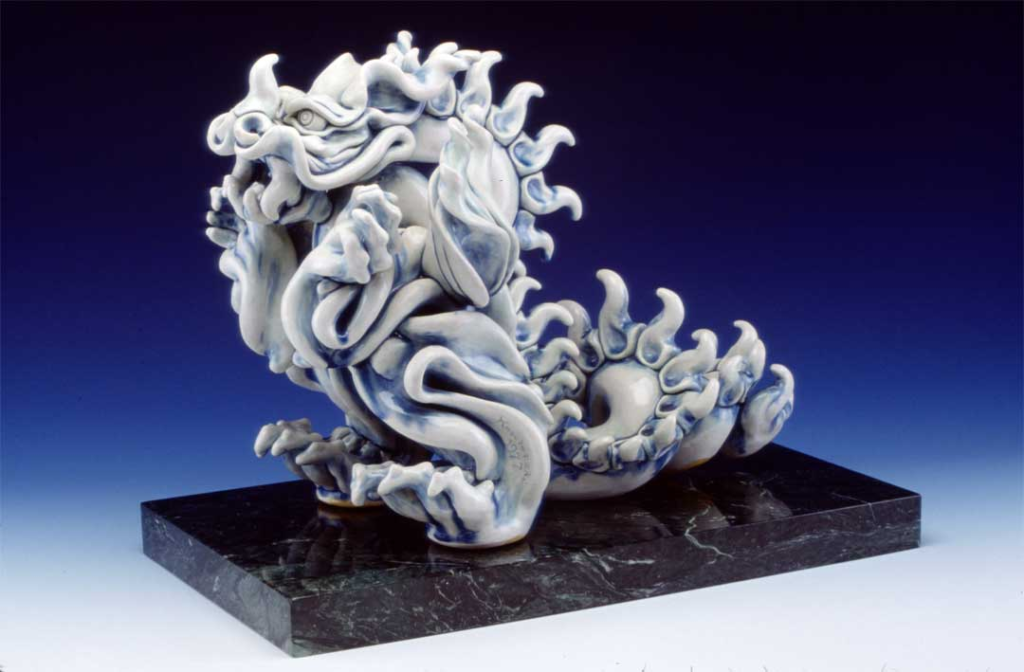
Carved from a single piece of porcelain and measuring 24″L × 14″W × 19″H, this Wyvern is mounted on a Vermont Verde marble base. Fired close to vitrification, it began to slump, and its nose briefly fused to the kiln wall, holding the form until cooling. A fragment of kiln brick was later removed, a reminder of porcelain’s unpredictability. The result is a singular Wyvern—fragile, enduring, and shaped by the dramatic forces of the kiln.
Porcelain Tatsu Figurine in Proprietary Oxidation Celadon Iron Glaze
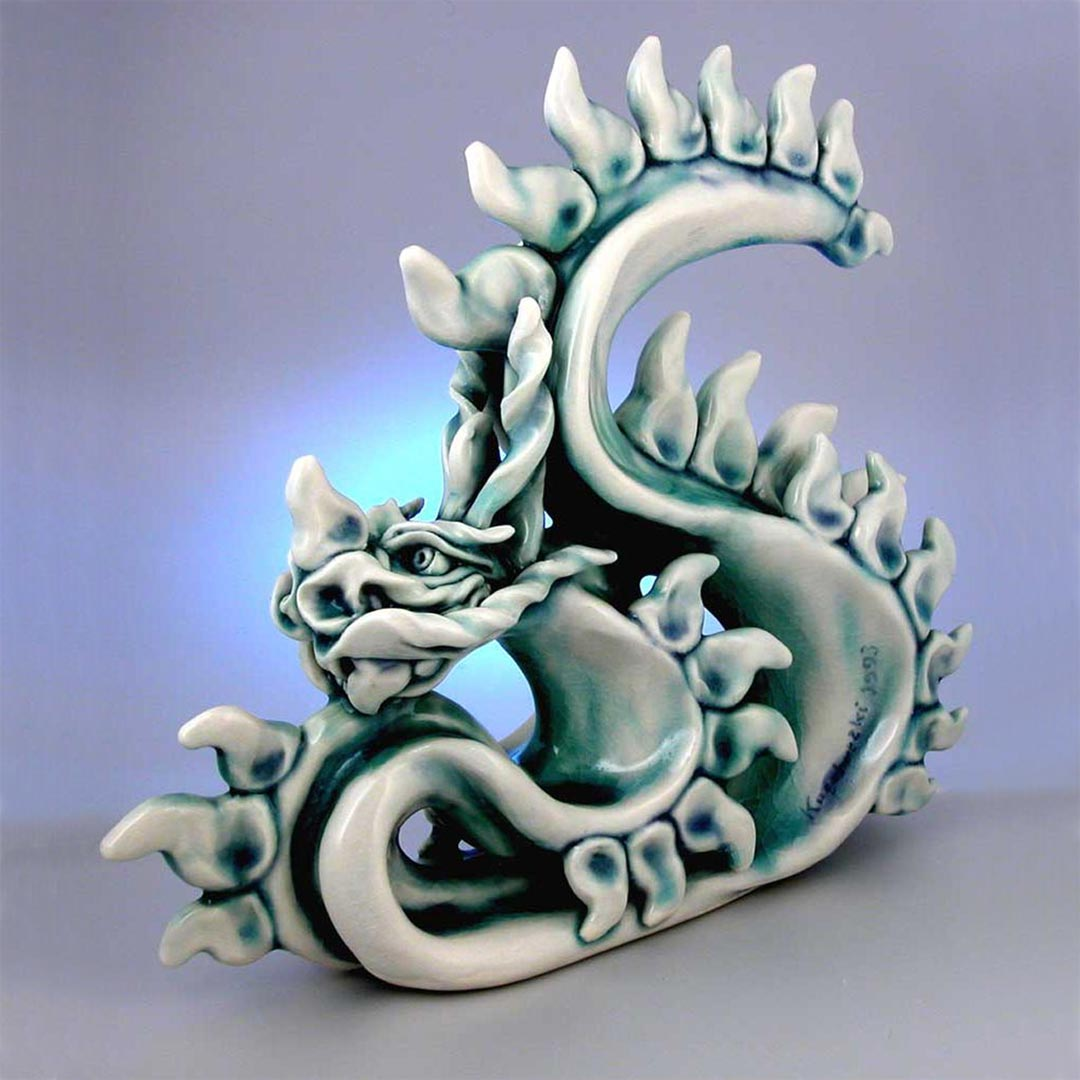
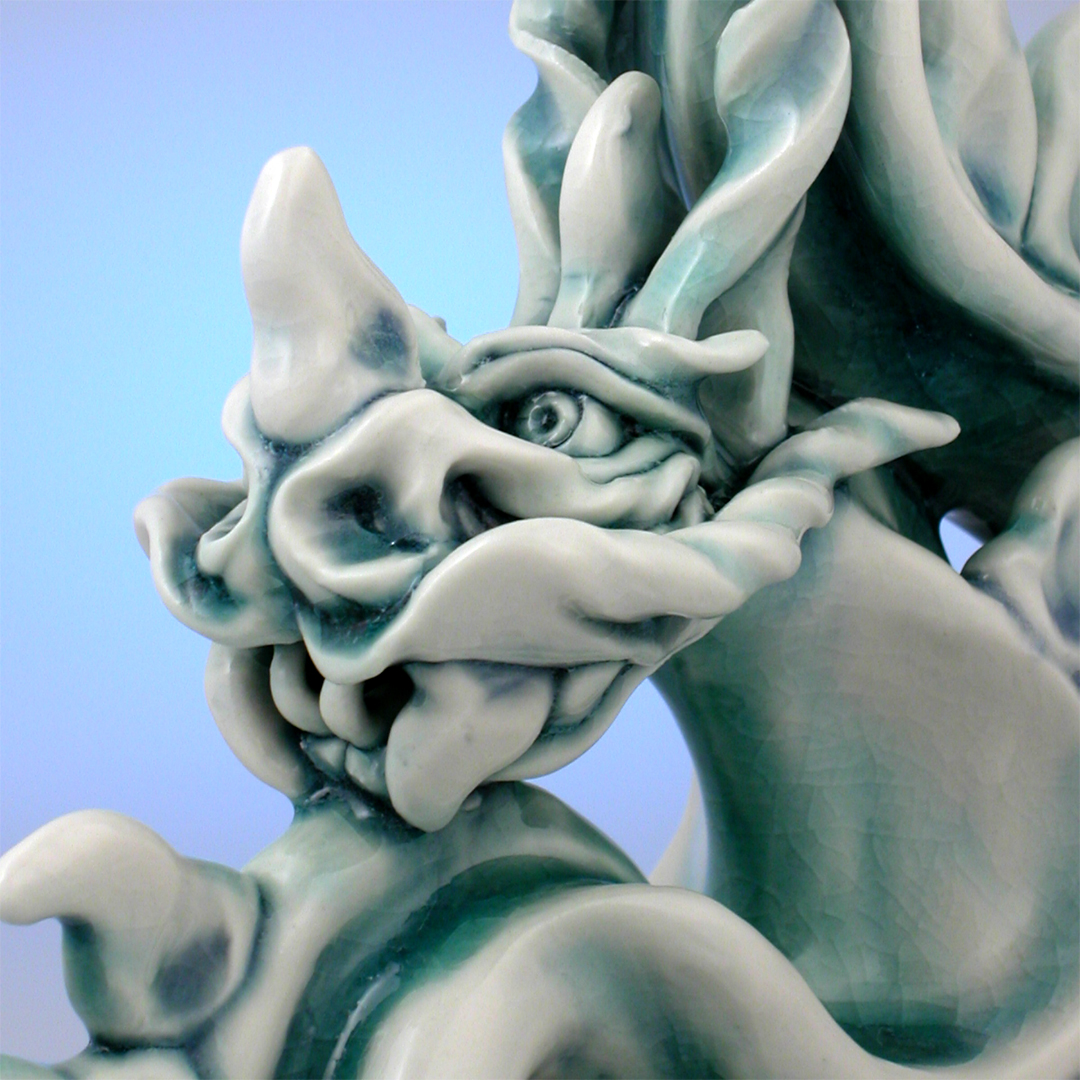
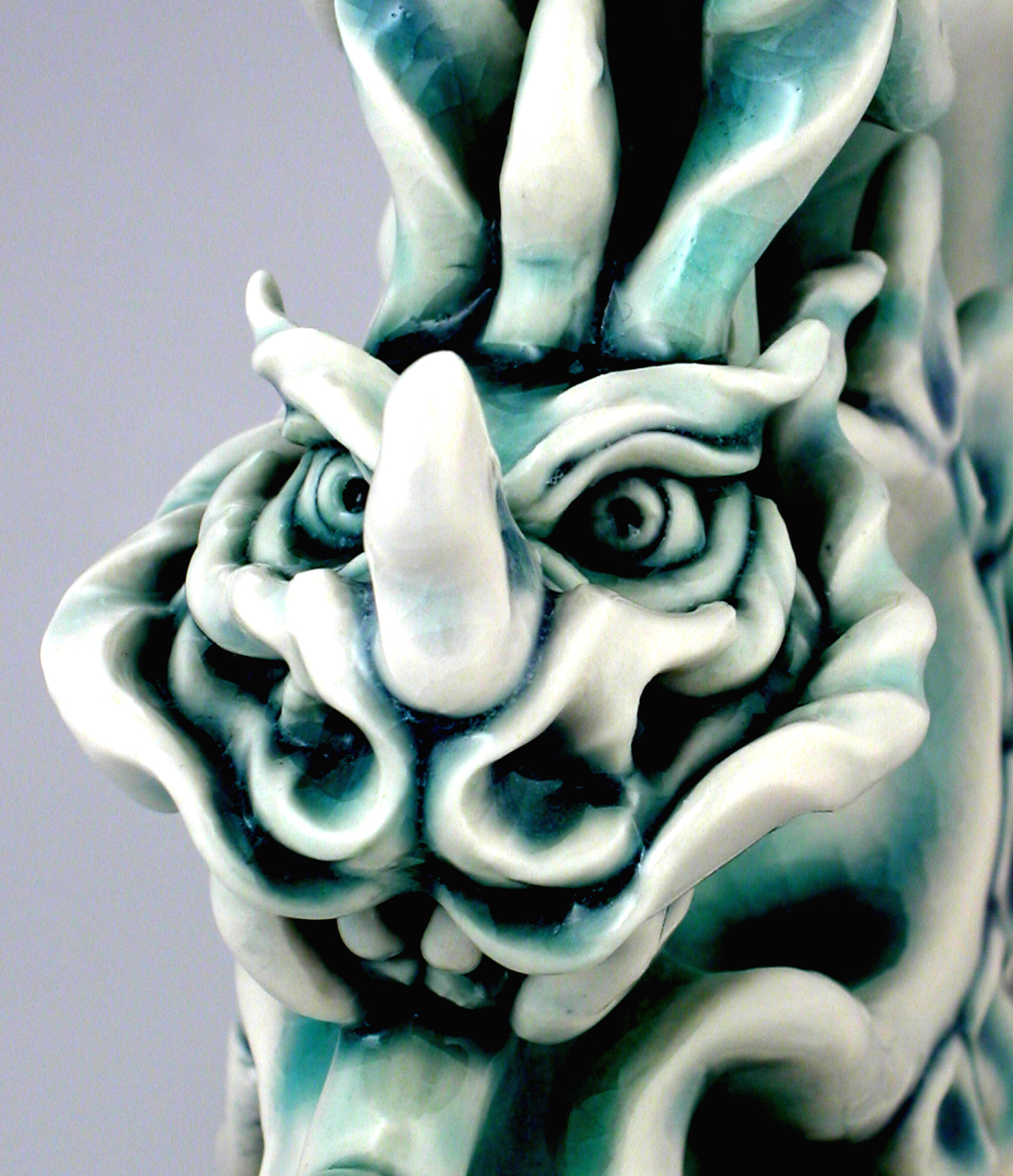
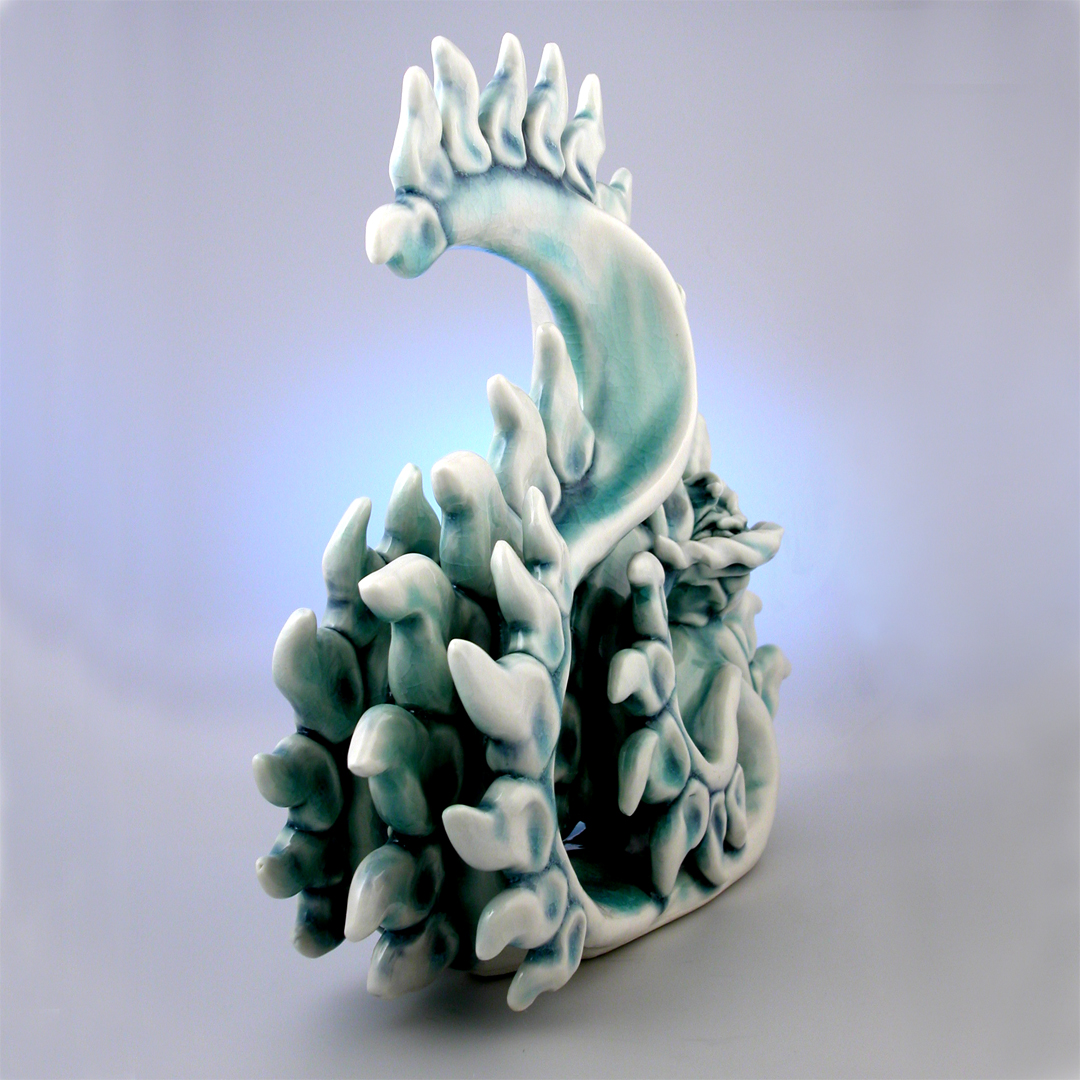
Carved from a single piece of porcelain, this handmade dragon sculpture draws on the Tatsu guardian tradition and is finished in my proprietary oxidation celadon glaze. The surface develops a luminous blue‑green depth without reduction firing, while high‑fire vitrification softens the contours into fluid, lifelike movement. The porcelain body sharpens the glaze’s clarity, blending Japanese mythic influence with contemporary fantasy sculpture.
Porcelain Ying‑lung Dragon Sculpture
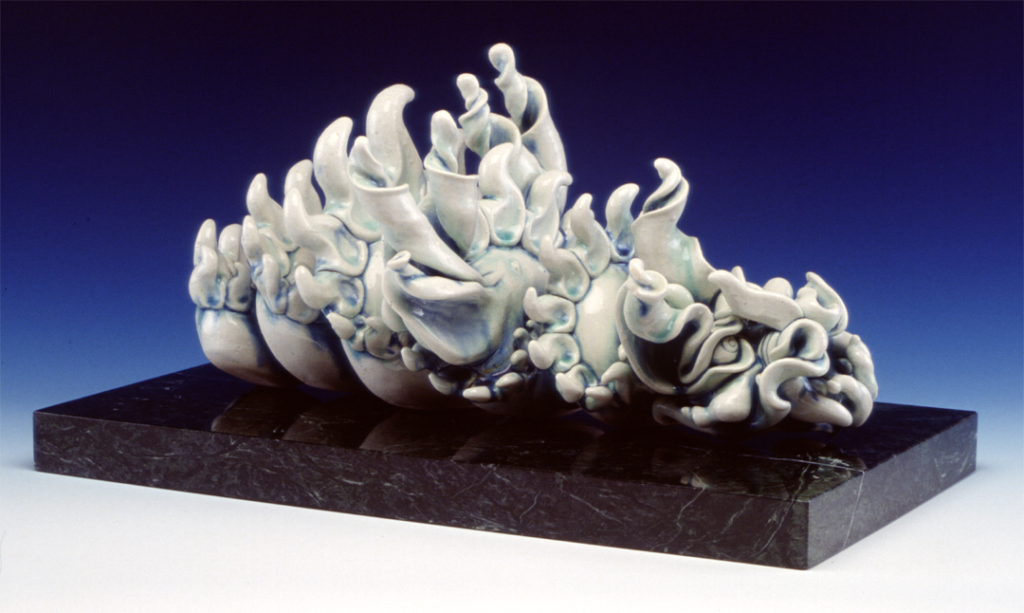
Carved and modeled from a solid piece of porcelain, this sculpture was high‑fired to over 2300°F in an iron‑green blue oxidation glaze. Its winged form recalls the Ying‑lung of Chinese mythology, reinterpreted through my Western studio practice. Mounted on Vermont Verde marble and measuring 26L × 14W × 13H, the piece unites porcelain craftsmanship, mythic reference, and sculptural refinement
Exclusive Porcelain Wyvern Dragon Sculpture
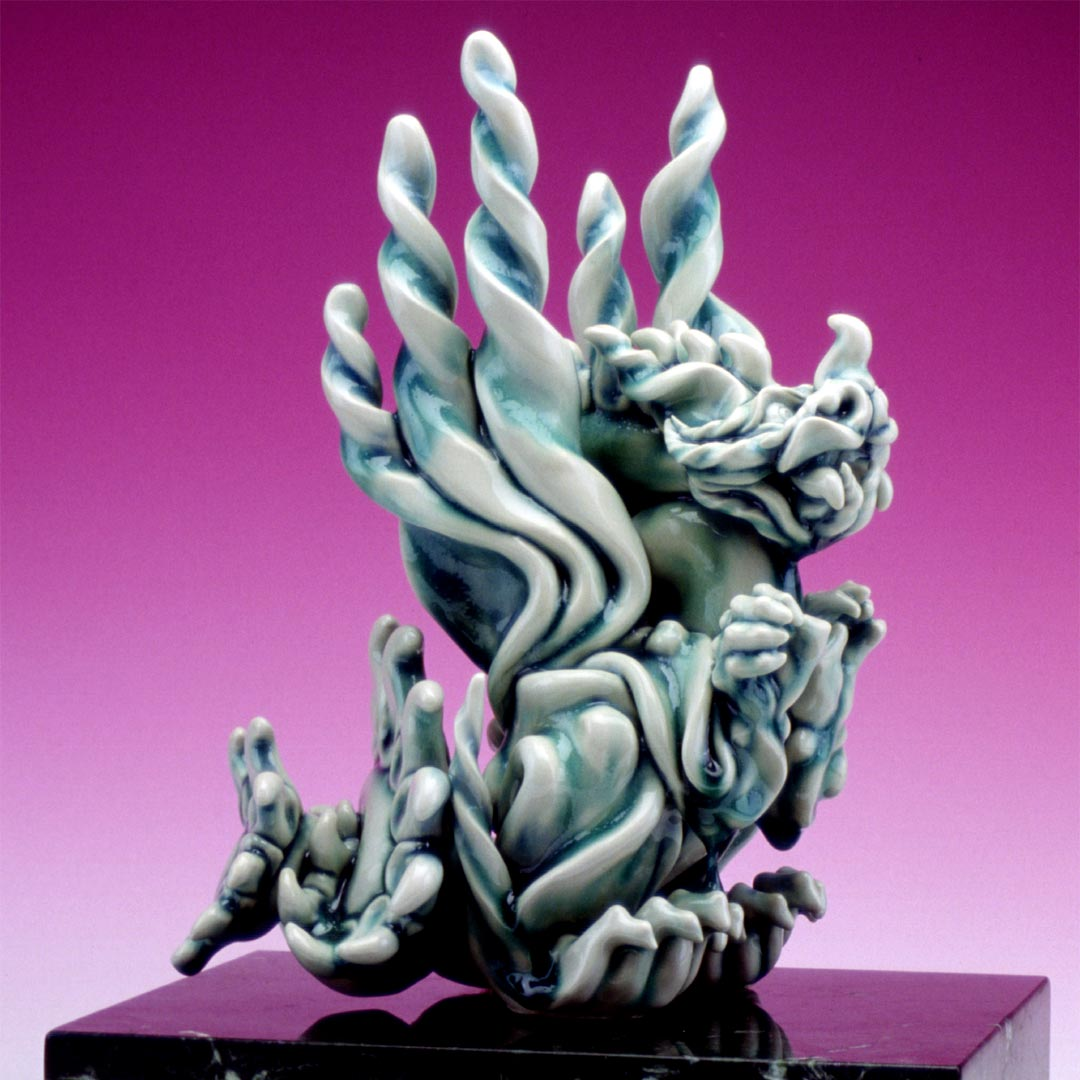
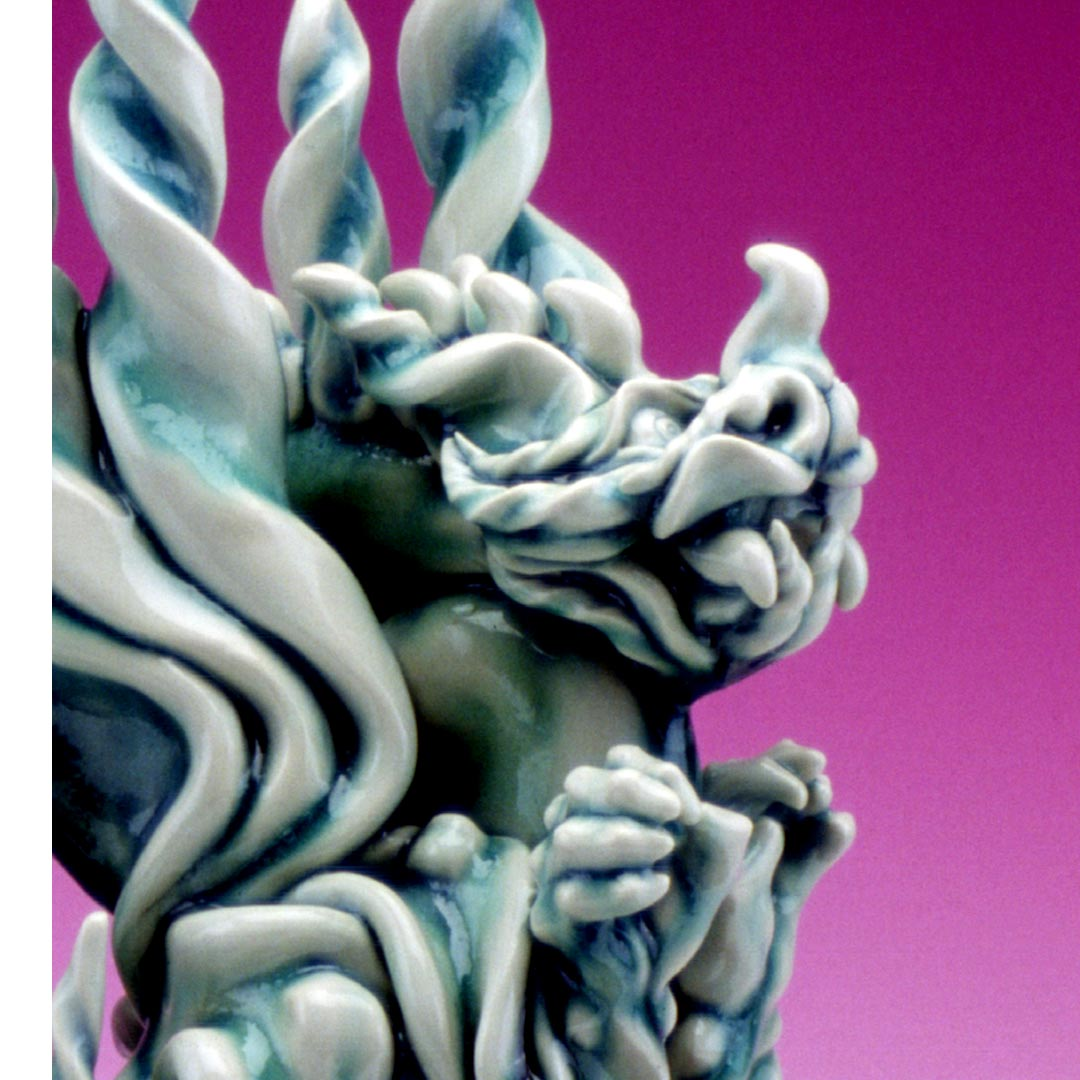
This porcelain Wyvern is a rare kiln success in a material that offers no guarantees. Porcelain shrinks and can crack or slump near vitrification, making each finished piece hard‑won. Its iron‑bearing oxidation glaze breaks into soft jade‑like shifts, catching on high points and pooling in carved lines. With its two‑legged, flame‑like lift, the Wyvern has a vivid presence and stands as one of my most fully realized porcelain works.
Wheel‑Thrown Porcelain Dragon Teapot
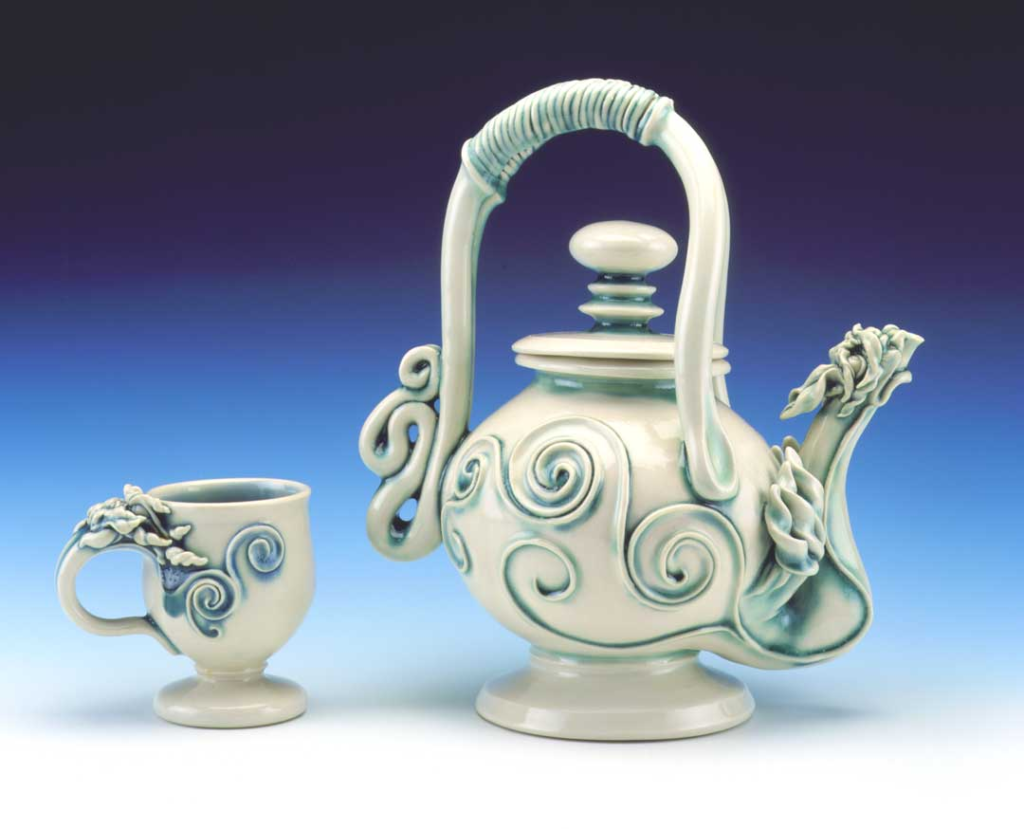
This porcelain dragon teapot is a one‑of‑a‑kind vessel, wheel‑thrown and sculpted with a winged dragon motif. Built with advanced ceramic technique, it blends functional elegance with sculptural refinement. Its celadon‑style blue‑green glaze, developed through high‑temperature oxidation firing, gives the porcelain luminous depth. More than a teapot, it stands as a fusion of utility, imagination, and the Dragonartist aesthetic.
John Gardner’s Grendel Dragon Sculpture (1972)
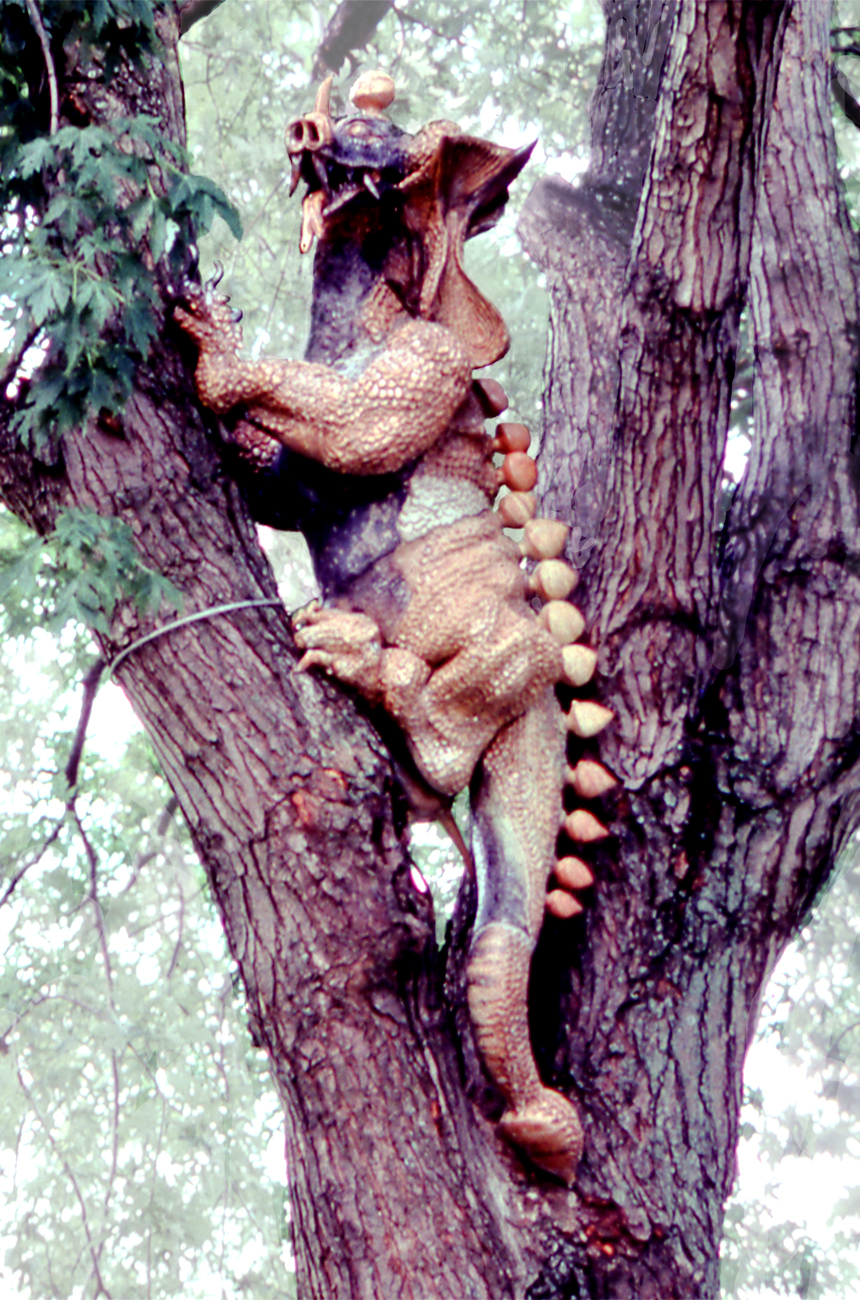
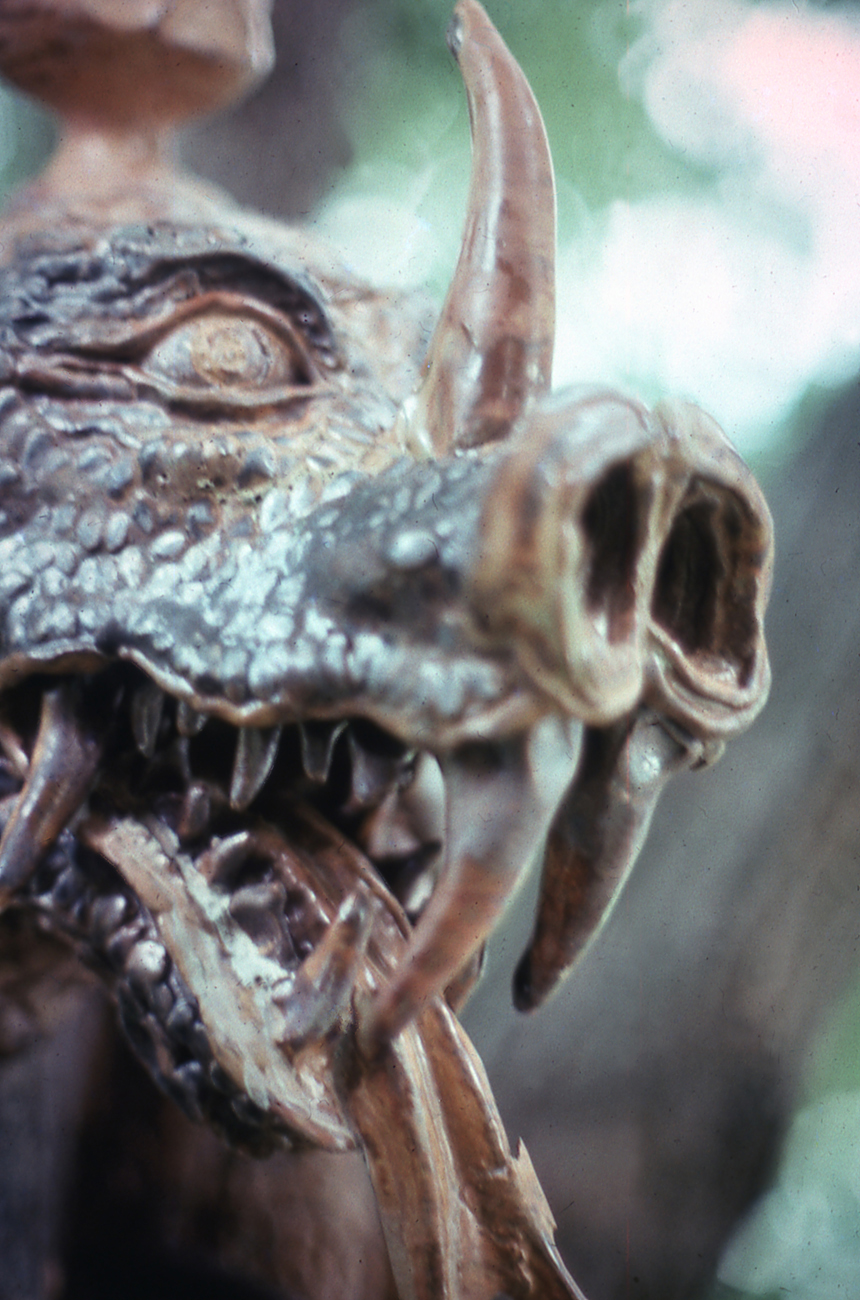
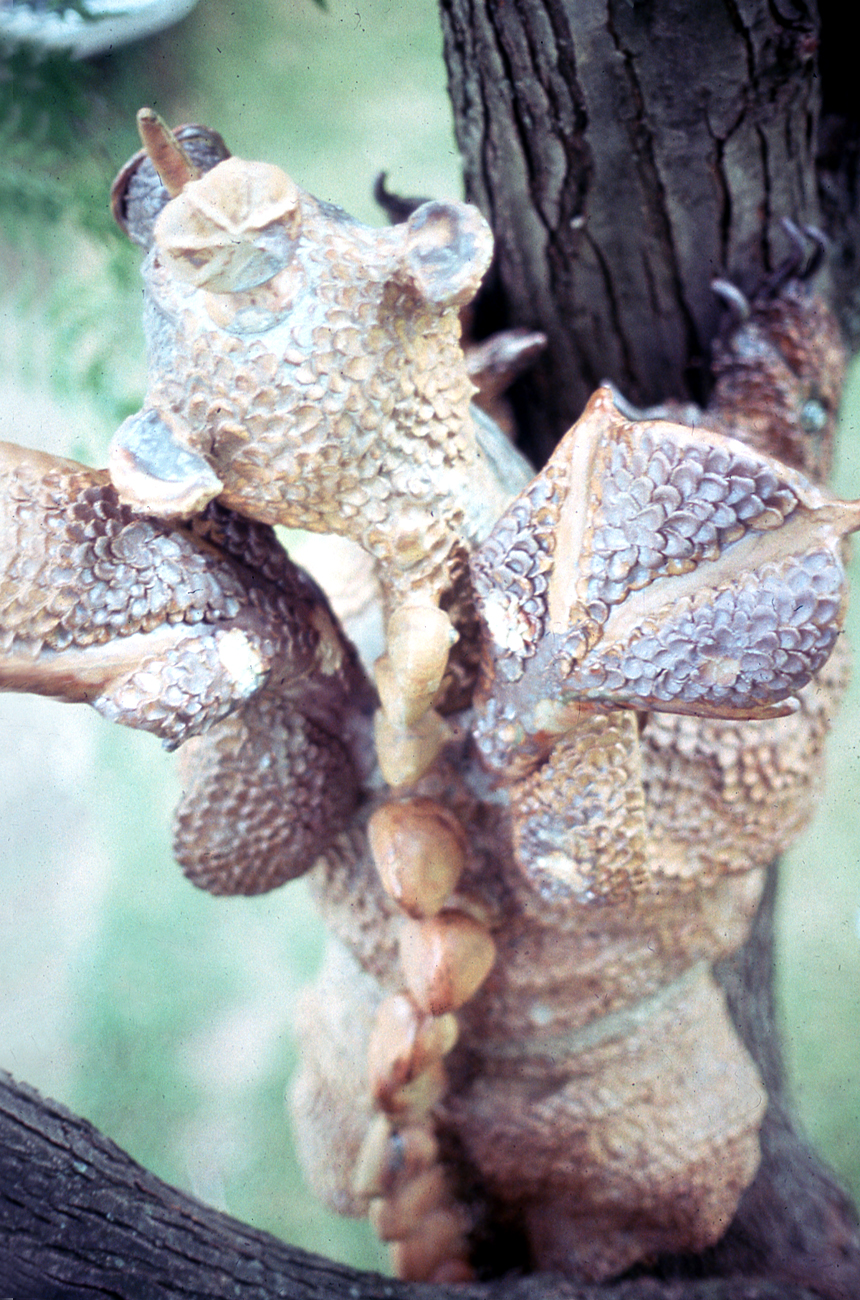
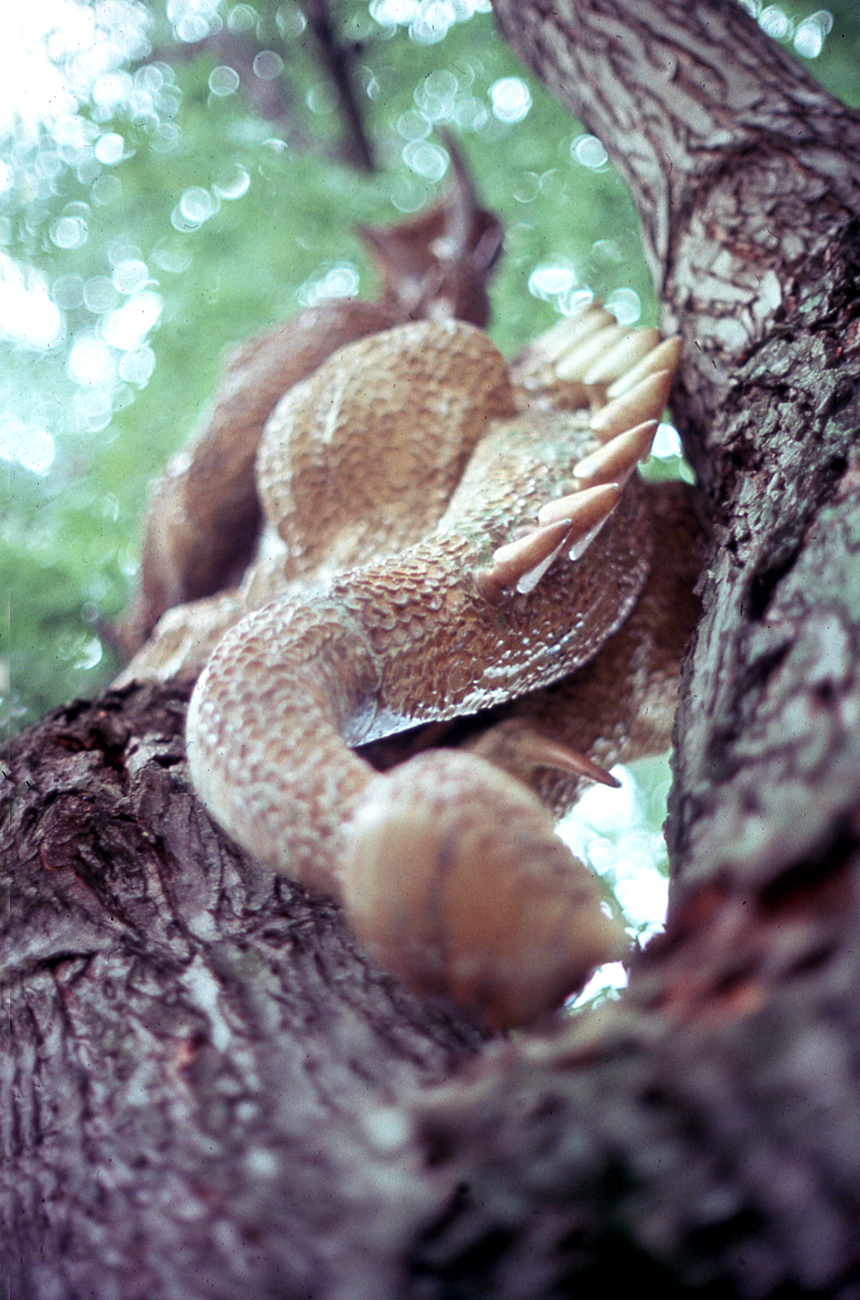
John Gardner commissioned this stoneware ceramic dragon sculpture “Dragon” in 1972 to embody the Dragon who delivers the central philosophical vision in his novel Grendel. Nearly eight feet tall, the sculpture was built in hollow ceramic sections and anchored into an ancient silver maple beside Gardner’s Beaux‑Arts farmhouse in southern Illinois. Salt glazing produced shifting ochre and green‑blue tones, giving the Wyrm a fire‑born presence that greeted visitors from the second‑story balcony.
Monumental Ceramic Dragon Sculpture — Handmade 3D Stoneware Guardian Inspired by Beowulf
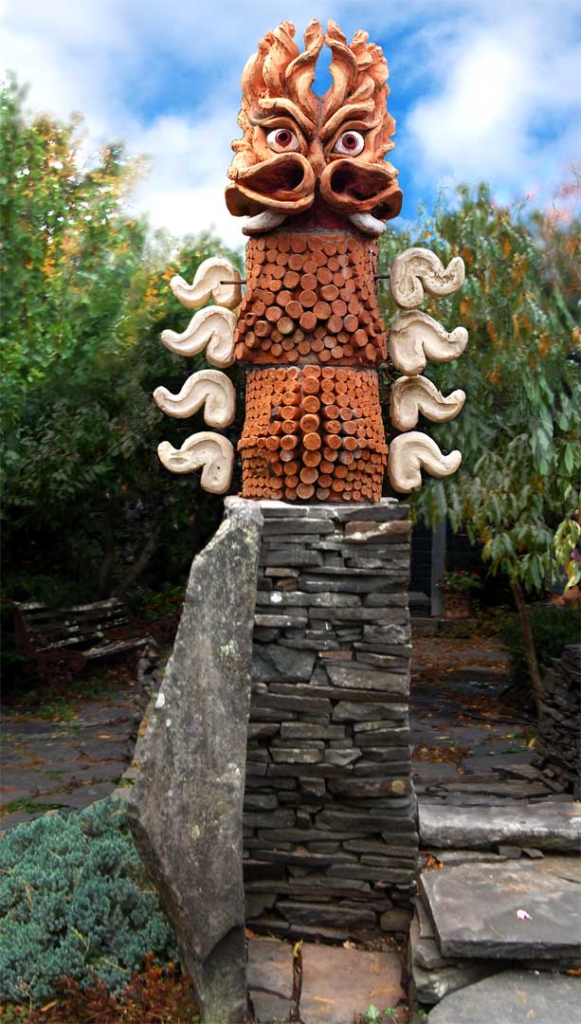
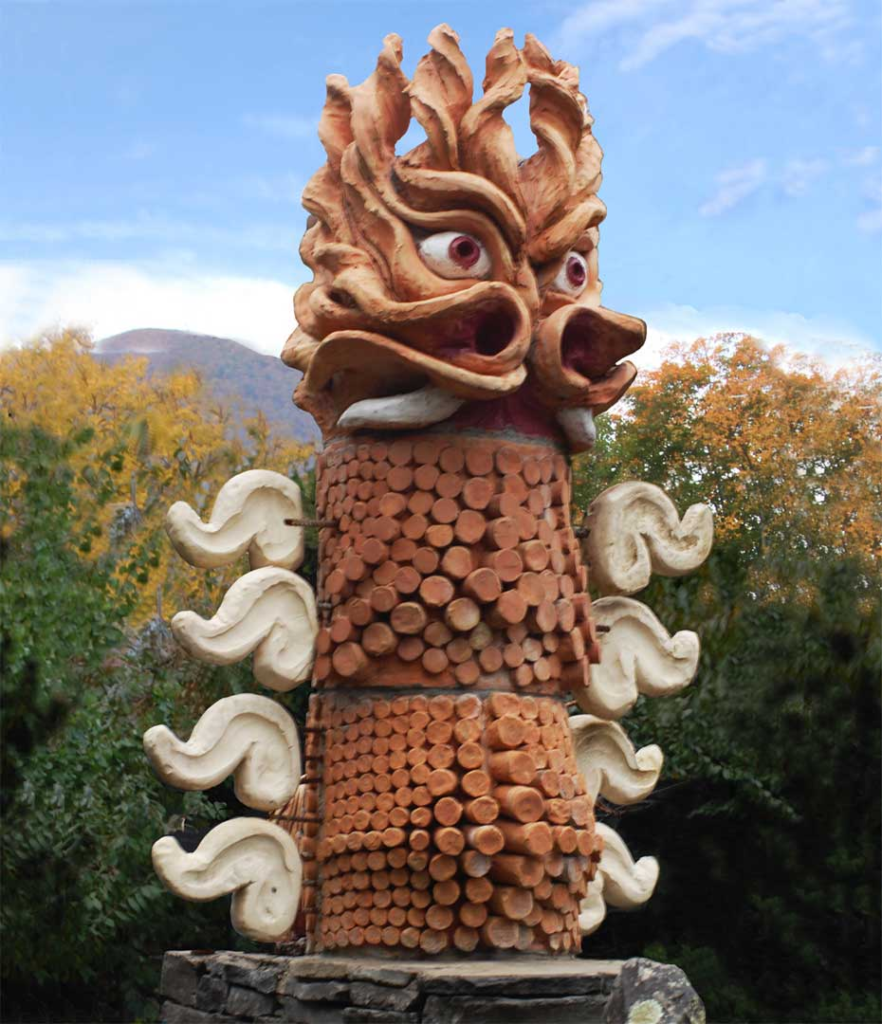
The firing heat transforms raw clay into stone, forging permanence from earth and flame. Rising 11 feet on its Catskill Mountain bluestone base, this monumental 3D ceramic dragon sculpture embodies the mythic presence of Beowulf’s Dragon. Its iron‑rich stoneware surface recalls weathered sandstone, grounding the piece in geology as much as legend. More than a work of ceramic art, it stands as a handmade guardian at our entrance, keeping a timeless watch over our home and welcoming visitors into our ceramic art collection.
Salt‑Glazed Stoneware Dragon Jar
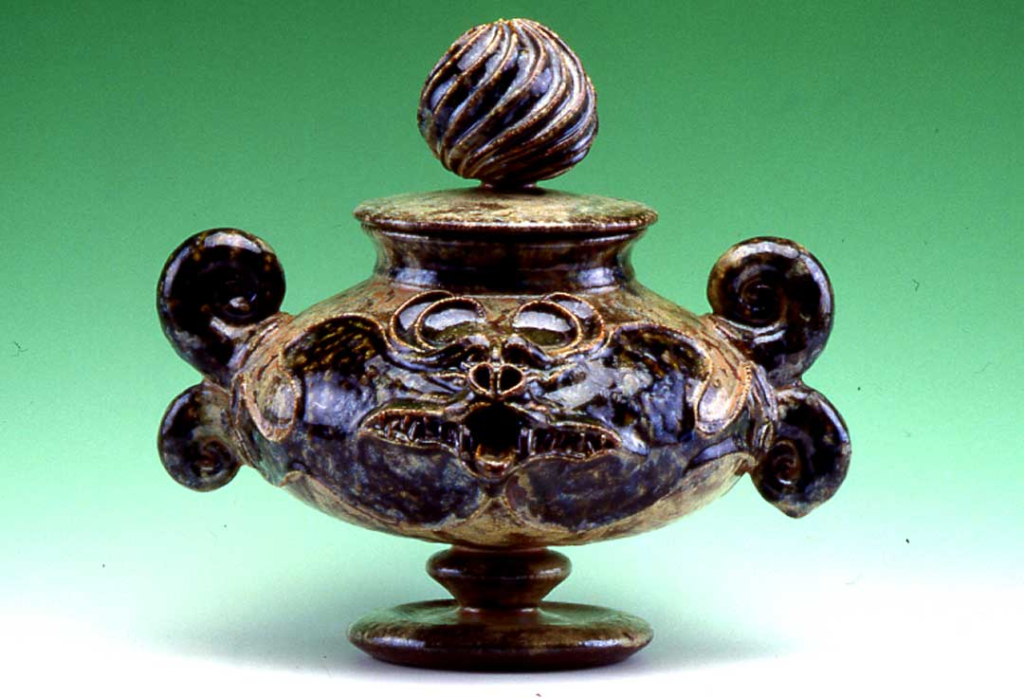
This salt‑glazed stoneware jar is wheel‑thrown from natural clay and carved with a stylized dragon face. Reduction firing creates ocher‑to‑iron tones, while vaporized salt forms a shimmering kiln‑born texture. Rugged yet refined, it reflects the endurance and artistry of high‑temperature ceramic work.
Ceramic Tile Relief Dragon Mural — Hand‑Carved Sculptural Tile in Stoneware Clay
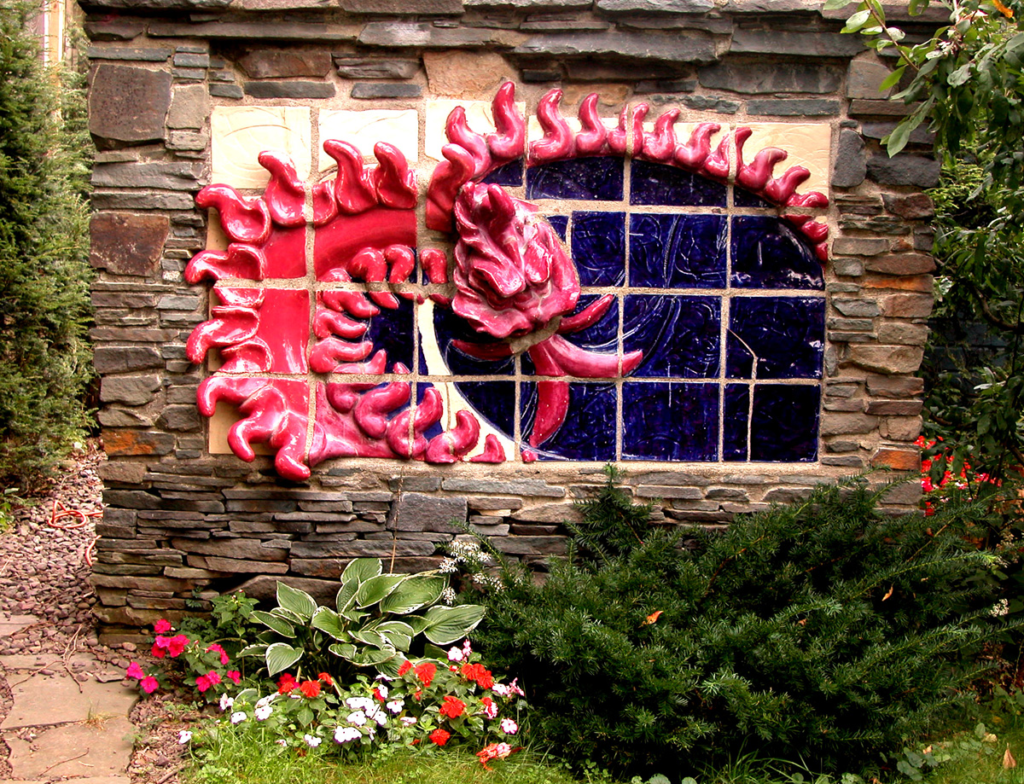
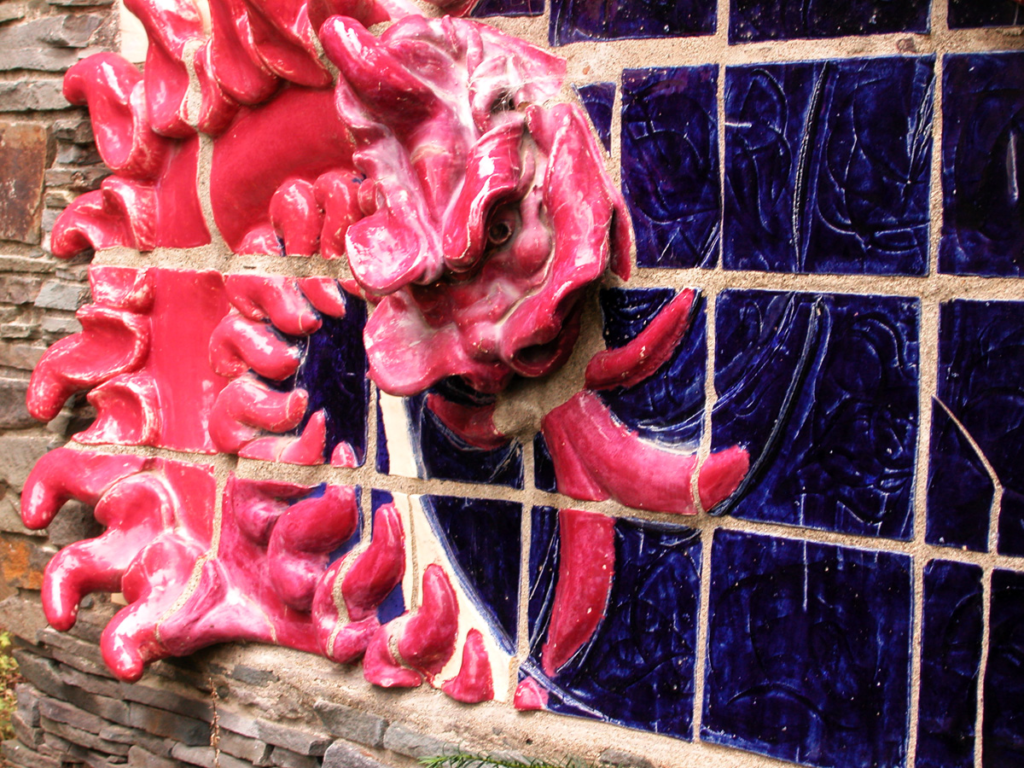
This 4 × 8 ft ceramic tile relief dragon mural draws on the long tradition of tile relief murals, carved in large sculptural tile sections and installed in a Catskill Mountain bluestone wall. Formed from hand‑carved stoneware clay, the dragon rises in high relief, its deep red surface contrasted by blue‑glazed background tiles that create a fire‑and‑sky color balance. The wall was originally built over the roots of an old sugar maple, and as the roots decayed, the structure developed a subtle lean that introduced a quiet, otherworldly tension to the installation. In this image, the wall remains visually balanced, preserving the mural’s original presence as a piece of hand‑carved ceramic relief tile art and architectural sculpture.
Porcelain Tatsu Dragon Vessel — Wheel‑Thrown Carved Effigy in Celadon‑Style Glaze
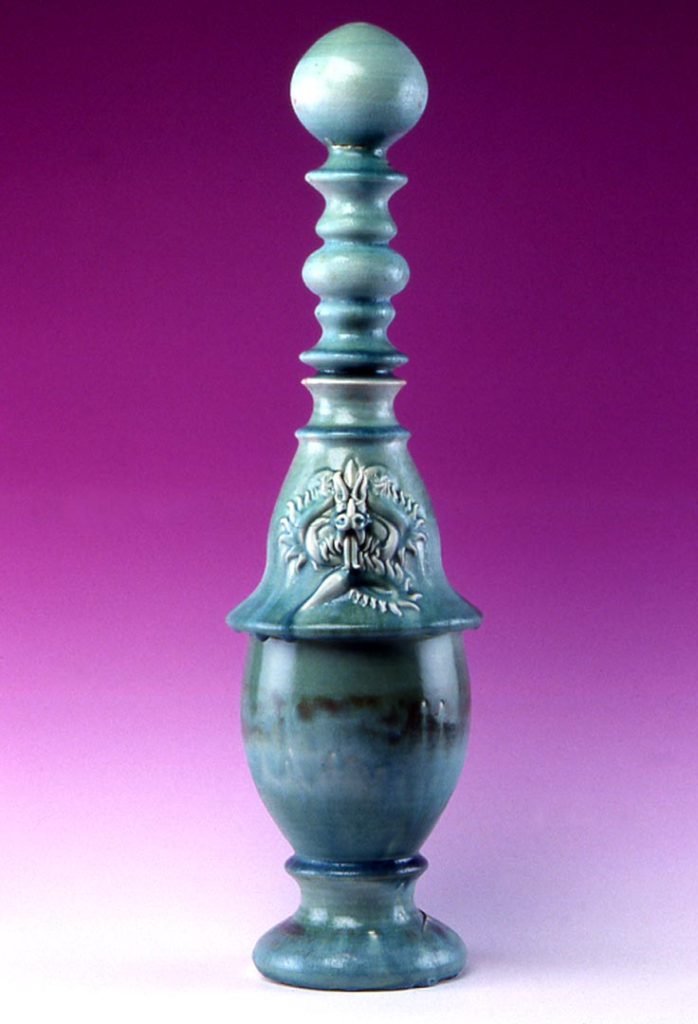
This wheel‑thrown porcelain vessel is carved in relief with a flowing dragon effigy rooted in the Tatsu tradition. A proprietary iron‑bearing celadon‑style glaze develops translucent depth in high‑temperature oxidation firing, settling into a polished river‑green surface that reveals the carved lines. The form carries a balanced, protective presence—an elegant guardian shaped through clay, water, and fire
Ceramic Tile Relief Dragon Mural — High‑Relief Stoneware Sculpture with Sun and Moon
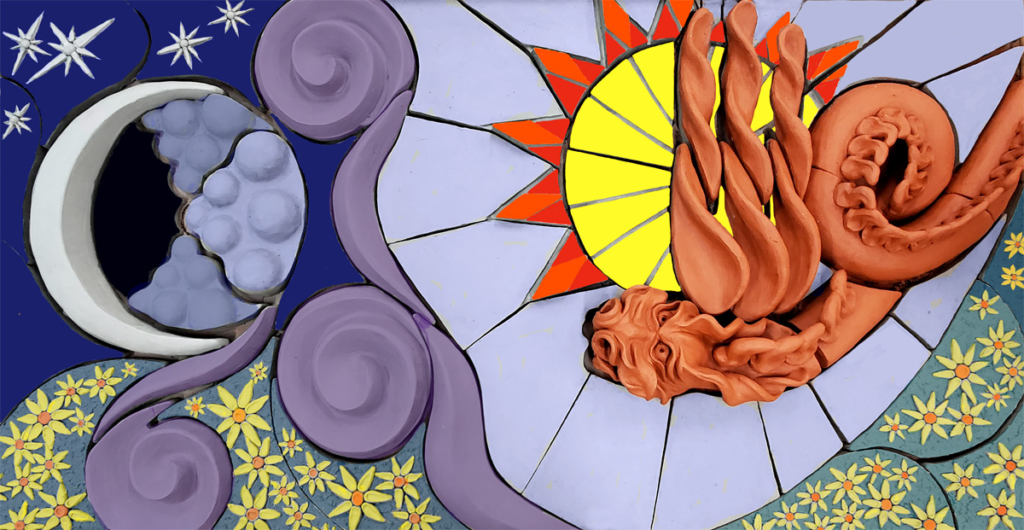
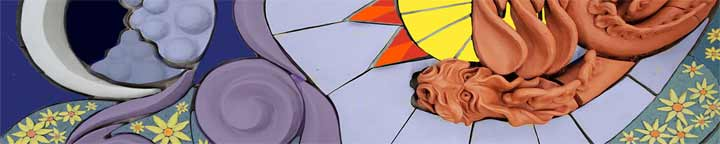
This 4 × 8 ft ceramic tile relief dragon mural is carved in high‑relief stoneware, presenting a winged dragon moving through a swirling night sky of stars, a radiating sun, and a deep night void. Metallic oxide glazes catch the light across the mural, giving the dragon a luminous presence against the shifting sky. The composition reads as a visual painting in clay, blending mythic storytelling with architectural ceramic art and forming a unified work of ceramic tile art and site‑specific stoneware relief sculpture
Porcelain Tatsu Dragon Funeral Urn — Hand‑Sculpted Memorial Vessel
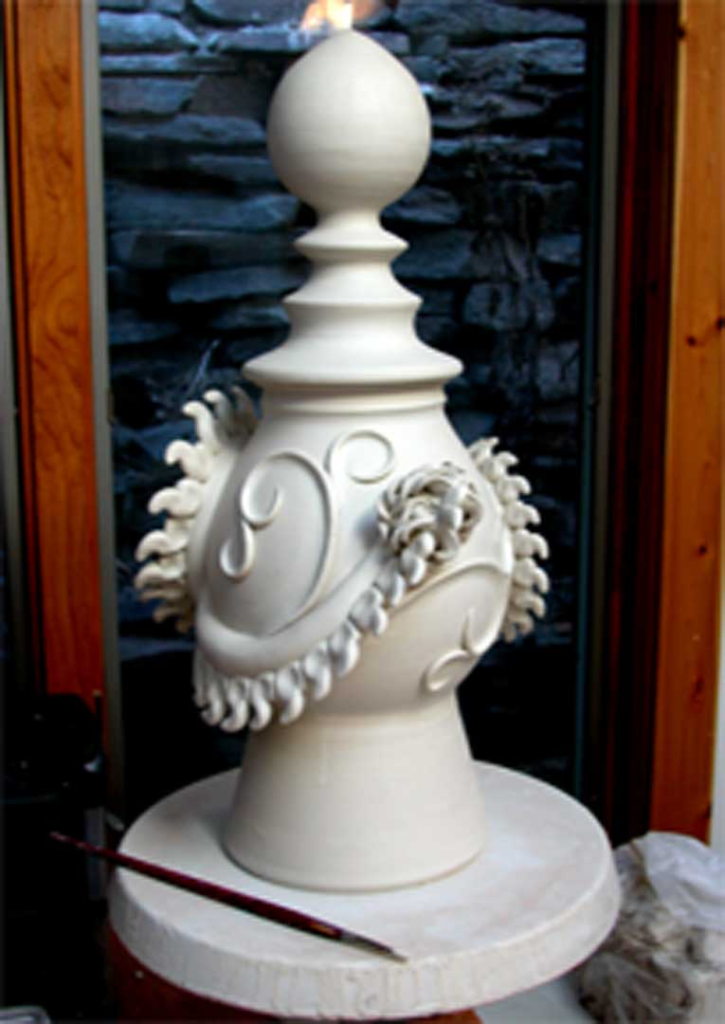
This commissioned porcelain funeral urn, wheel‑thrown and hand‑sculpted with a twirling dragon in the Tatsu tradition, is shown here in its greenware state awaiting transformation. More than a vessel, it stands as a guardian of memory—holding ashes, yet also holding love.
Studio Reflections on Creating Ceramic Dragon
In my studio, each ceramic dragon sculpture begins as movement rather than myth. Clay twists beneath my hands, rising in spirals and curves until a face brings the form to life. That moment of emergence—when an abstract gesture becomes a living presence—is the heart of my process and the foundation of every ceramic dragon sculpture I create.
Cultural names help place these works within global traditions: the wingless Chinese Yinglong soaring through the skies, the Anglo‑Saxon Wyvern with its fire‑borne stance, the Japanese Tatsu coiling in protective motion, or the Greek drakon guarding hidden places. Their shapes—winged or serpentine, coiled or standing—connect them to the stories people search for when seeking a ceramic dragon sculpture rooted in mythic lineage.
Yet myth is only a doorway. The real work lies in shaping clay into motion and spirit, in transforming raw material into a form that feels alive. Each ceramic dragon sculpture grows from gesture, weight, and breath—an interplay of porcelain or stoneware responding to touch, pressure, and fire.
Naming honors tradition and strengthens visibility, but the creative act remains rooted in the simple, enduring joy of clay becoming flame, form becoming life, sculpture becoming dragon. In the end, every ceramic dragon sculpture carries both its cultural echoes and the quiet, personal rhythm of the studio where it was born.
Explore my broader ceramic portfolio to see work beyond the dragon series.