
Exclusive Porcelain Wyvern Dragon Sculpture
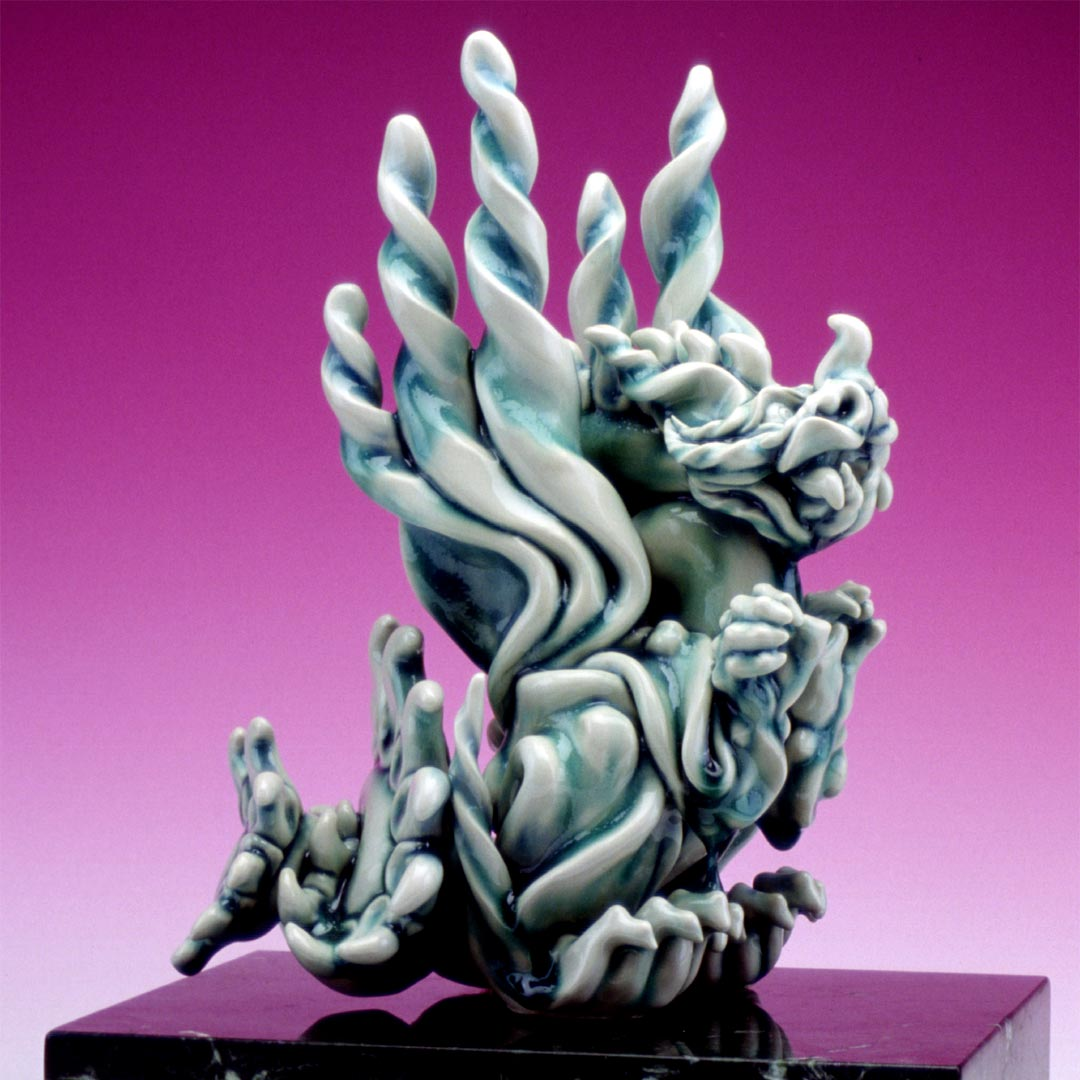
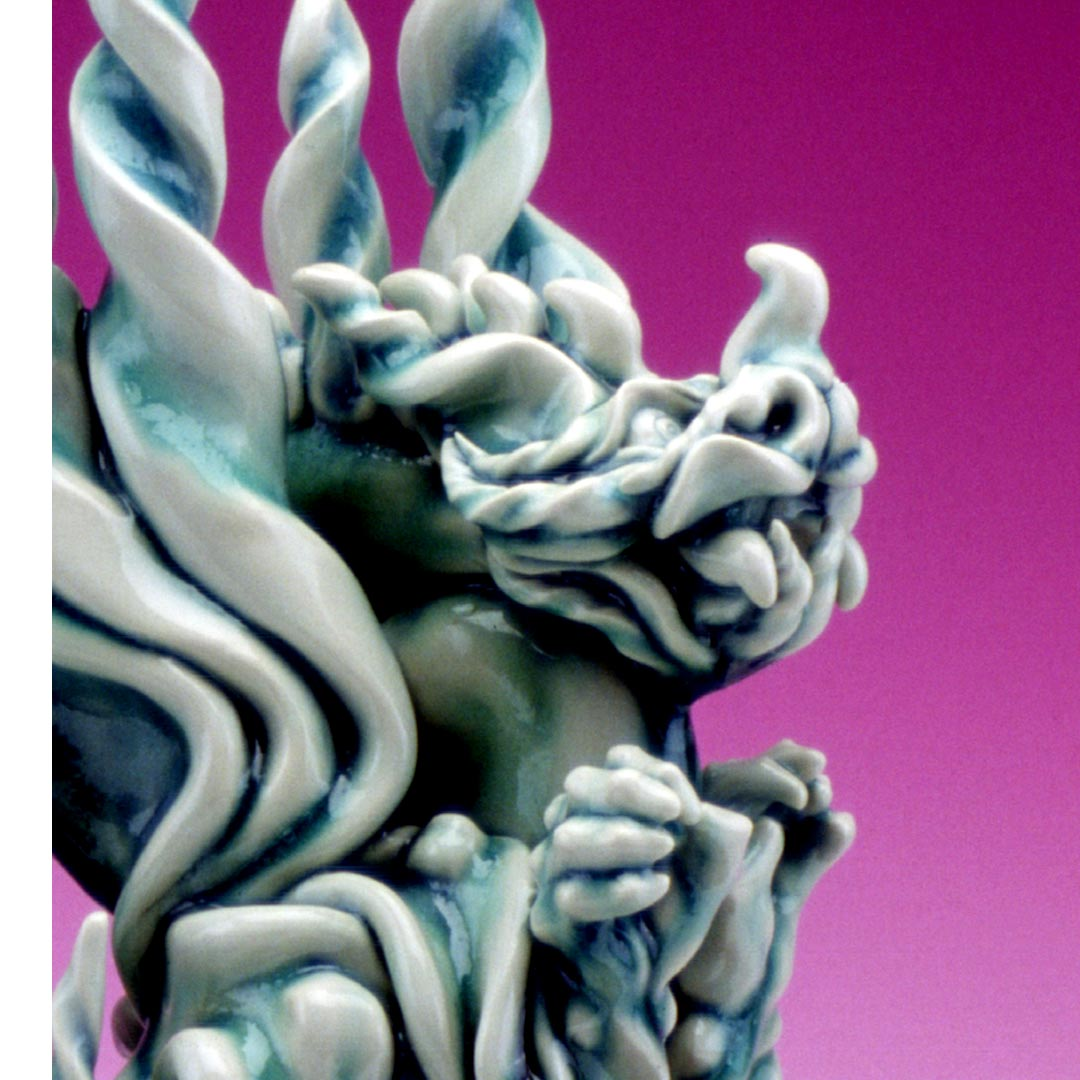
Working in porcelain requires a balance of timing, hydration, and touch. Much of this Wyvern’s form was shaped not with traditional modeling tools but with a fine acrylic brush, guiding the clay while constantly managing its water content. Too much moisture and the porcelain collapses into a toothpaste‑like slurry; too little and joined components will separate as the piece dries. High shrinkage adds another layer of risk. The clay body for this sculpture is my own formula, designed to withstand the stresses of drying and to match the thermal expansion of the glaze, preventing future crazing.
The glaze itself is a proprietary formulation composed of oxides and calculated to balance its atomic structure for proper glaze fit. Through glaze‑calculation methods, its thermal shrinkage, flow, and maturity are tuned to develop at the exact heat‑work reached in firing. After a low‑fire bisque, the Wyvern was glazed and fired again at a controlled rate of 108°F per hour up to 2305°F, pushed close to vitrification where porcelain can easily slump if the chemistry or timing is off. The finished sculpture, mounted on Vermont Verde marble, reflects that entire technical dance: a material negotiation where every stage leaves no room for error.
This Porcelain Wyvern Dragon Sculpture also reflects my long‑standing interest in mythic creatures and the architectural presence they bring to sculptural form. Dragons and wyverns appear across cultures as guardians, symbols of transformation, and embodiments of elemental forces. Working in porcelain allows me to explore those ideas with precision, capturing fine textures and subtle shifts of expression that would be lost in heavier clay bodies. Each sculpture becomes a study in balance—between myth and material, fragility and strength, and the technical demands that define high‑fire ceramic art.